When a school books places on our positive handling open courses in the UAE, we ask for at least three members of staff. That raises a fair question: why three?
The answer starts with a simple principle. Physical intervention with a child is a team activity.
Why it takes two trained staff
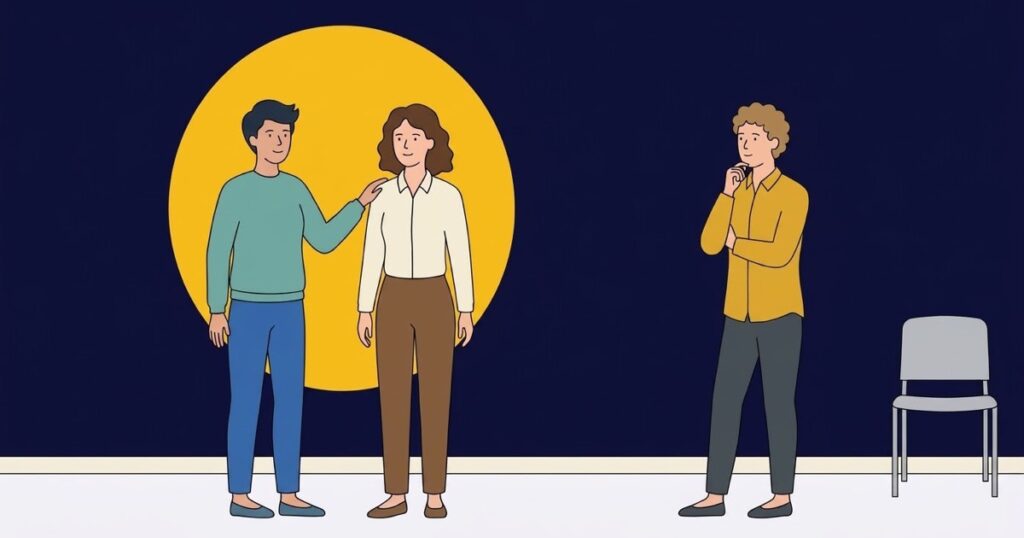
When restraint becomes necessary as a last resort, two trained members of staff are needed to hold a child safely. One person should not try to manage the intervention alone.
UK guidance for schools sets the same frame. Restraint is a last resort. Any intervention must use the minimum force for the shortest time that works (DfE, use of reasonable force).
Two trained staff can share the physical demands. They can talk to each other during the intervention and keep watching the child’s welfare. If the child’s breathing, colour, behaviour or distress changes, they can change their approach. They can also stop each other slipping into an unsafe position. They can check the force used and end the hold as soon as it is safe.
That protects the child, and it protects the staff.
There are wider safeguarding benefits too. When more than one adult is present, decisions and actions can be seen and checked as they happen. Afterwards, each member of staff can give a separate account. That happens when the incident is recorded, reviewed and explained. It supports transparency, accountability and learning (2019 guidance on reducing the need for restraint and restrictive intervention).
So why three?
Two trained staff carry out the intervention. The incident around them does not stop.
A third trained colleague may need to:
- move other pupils away from the area
- call for extra help
- speak to senior leaders or medical staff
- clear hazards from the space
- watch the child’s wellbeing
- reassure other children
- record what happened while it is fresh
The third person is also cover. A trained colleague may be absent, teaching elsewhere, or already dealing with another situation. Train only two people and the school can be left without a working team. That tends to happen at the moment it is needed most.
Getting the most from our positive handling open courses
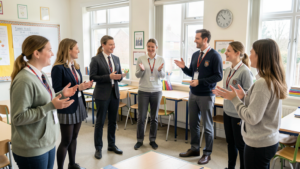
Three colleagues who attend together can relate the course to their own pupils, their policies and their building. They build shared language and practise working as a team. One person returning alone has to explain scenario-based learning second hand.
Choose the three with care. A strong group often includes someone from inclusion or pastoral support. Add a member of the senior leadership team, and a colleague who regularly supports children whose behaviour can become distressed or unsafe. That joins frontline practice to leadership oversight.
Groups of about three to five work well on an open course. A small school team trains alongside staff from other settings. Several of those teams have come from international and bilingual schools in the UAE and the Gulf. Their feedback is a fair picture of what staff take away.
If a school needs to train ten or more staff, training across a trust may fit better. So may a course delivered in your own school. Both give more room to shape the work around your pupils, risks and procedures.
One person can attend a course and gain useful knowledge. Three people can go back to school as the start of a properly trained response team.
That is why we ask for a minimum of three. If you are choosing staff for an open course, tell us the ages and behaviours your staff meet. We will help you work out the numbers. The same goes if you are weighing open places against a course in your own school.