
Restraint in school – what the law says

A pointer to a Schools Week article by solicitor Jade Kent on the use of force, plus Mark Dawes’ advice on agreed policy, suitable training, behaviour plans and recording everything.
Positive Handling By The Numbers #6: Duty of Care

Duty of care is set out as the concept behind any decision to step in and create safety. Cases include a learning assistant badly hurt lifting a fallen Christmas tree off children.
Positive Handling by the Numbers #5: Five Values for Effective Interactions in the Classroom
When a child refuses a reasonable request and says you cannot touch me, the post asks how the situation was allowed to build, and sets out values that favour non-escalation over de-escalation.
Staff Governor said: “competent, clear, precise, logical training with good humour”
Clear, logical delivery with some humour, plus theory alongside practical scenarios, is how a staff governor described the day, which covered duty of care and reasonable force.
Positive Handling by the Numbers #4 – Be Cautious around 4-year Olds!
Four reasons to be cautious with young children, including the strain of working at low level and the way early years children can pass the point where de-escalation still works.
I forgot all the “holds ” within days because training in the past has been too complex

A reception teacher says past training was too complex and the holds were forgotten within days, while this course was clear and easy to remember. Summer feedback from other school staff follows.
Positive Handling by the Numbers #4: Forewarned about (some) Four-year-olds is Forearmed
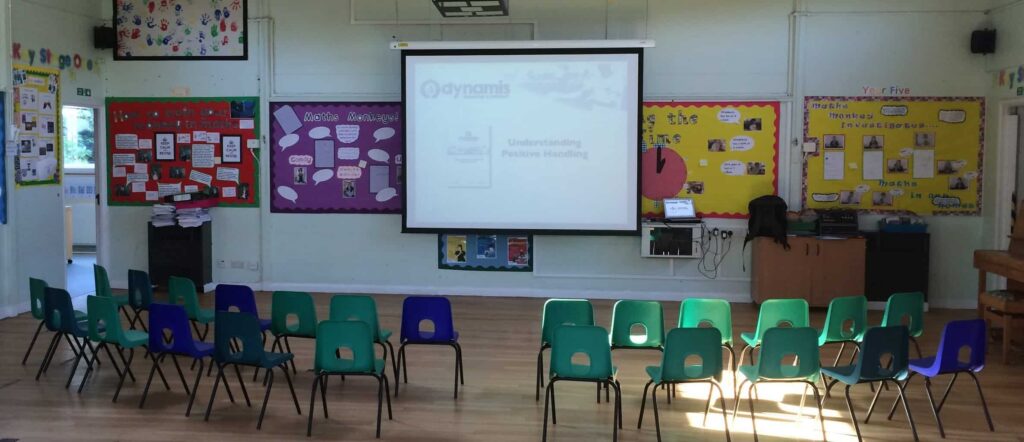
A 2012 London incident in which a Reception child put two teachers in hospital shows the damage a four-year-old can do, and why plans must consider a wide range of risks.
Positive Handling by the Numbers #3: Section 3 Risk Assessments
Section 3 of the Management of Health and Safety at Work Regulations 1999 requires employers to assess risk to employees. Three approaches follow, covering the role, foreseeable events and dynamic decisions made mid-incident.
Positive Handling by the Numbers #2: The Number is Always Two!
Two staff are the minimum for any physical intervention. One colleague witnesses and corroborates what happened, and the tactical arithmetic is against a lone adult facing a child in crisis acting primally.
Positive Handling by the Numbers #1 Working Solo

One person positive handling is described as inherently dangerous and not recommended. A rural school case shows staff working alone with phones that had no signal, so lone worker provisions need careful thought.