
Positive Handling Training for Special Schools
Practical, lawful positive handling for special schools, built around the pupils you actually teach and the incidents your staff actually face.
Wording that matches your setting
Autism, SEMH, PMLD, complex needs. The course is written for your pupils, not a generic classroom.
Legally defensible from the first minute
Every hold is taught against the 2026 DfE guidance on reasonable force, so staff can explain what they did and why.
Consistent across your trust
The same language and the same standards, whether a pupil is in Key Stage 1 or a post-16 unit.
Skills that survive a hard day
Rehearsed with real scenarios and a partner, not watched on a screen once and forgotten.
What is at Stake?
A pupil in crisis is not a discipline problem. They are a child whose nervous system has run out of options, in a building where the adults have to keep everybody safe. When staff handle that badly the consequences are serious: injury to a child, injury to a member of staff, a restraint that cannot be justified in an incident review, and a family that no longer trusts the school. When staff handle it well, the same incident ends in a quiet room and a conversation, and nobody is filling in an injury form.
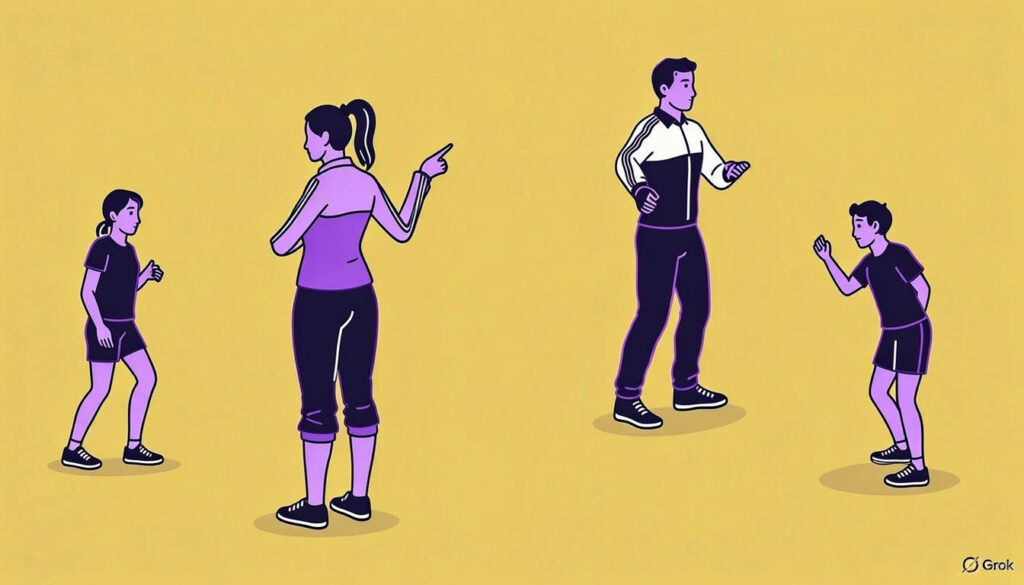
Risk 1
Your staff
Your team wants to know what to do when a child is on the floor, and to know it before it happens. Confidence comes from practice, and practice comes from a course that rehearses the real moments rather than listing them.
Risk 2
Your children
Children who are held need it done well: briefly, safely, with dignity, and by adults who know when to stop. That is a training outcome, not a policy statement.
Risk 3
Your organisation
One avoidable injury is a safeguarding investigation, a staff absence, and a letter to parents. Positive handling is how a school demonstrates it thought about risk before something went wrong.
Why face-to-face beats a module
Positive handling is a skill, and skills are built in a room with a trainer, not in a slide deck. We teach the physical techniques, the de-escalation that comes before them, and the judgement that decides between the two.
Rehearsed, not described
Staff rehearse the incidents that actually happen in your school, including the transition, the corridor, and the moment a request becomes a confrontation.
Defensible afterwards
Techniques are taught alongside the decision test staff will be asked about afterwards: necessary, proportionate, and for the shortest time.
Behaviour is communication
Behaviour is communication. We teach staff to read what a pupil is telling them before they reach for a hold.
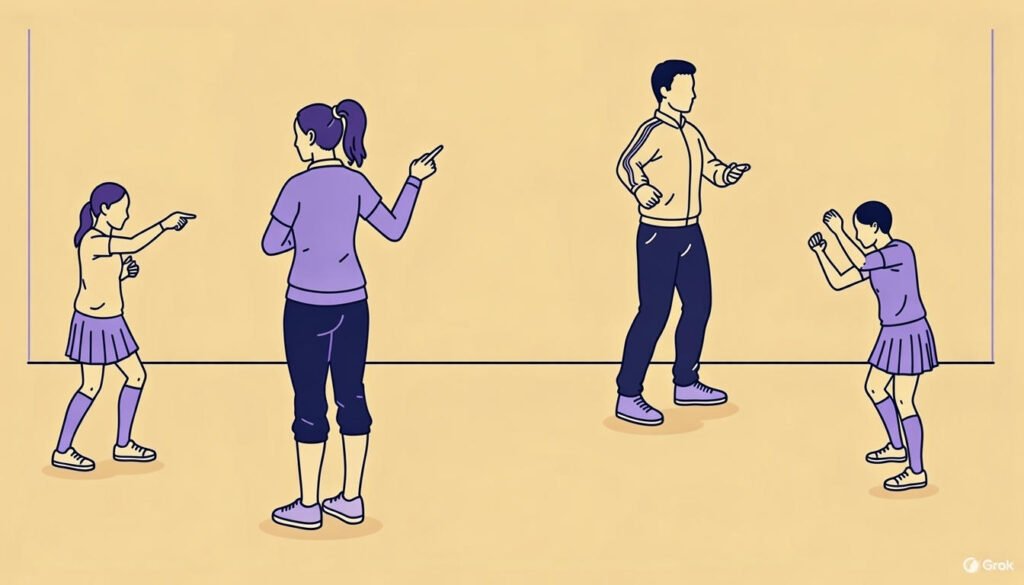
The day moves from prevention to response to review. Staff begin with what escalation looks like in your pupils, move to the verbal and non-verbal de-escalation that diverts most incidents, and only then practise the physical interventions they may need when it does not. Every technique is rehearsed with a partner, at a pace the group can hold.
Is this course suitable for special schools?
Yes. It is written for special settings, including autism, SEMH, PMLD and complex needs, and the scenarios are adapted to your pupils before the day.
Does it cover the 2026 DfE guidance?
Yes. Reasonable force, the decision test, and the record-keeping that follows an incident are taught alongside the physical techniques.
How many staff can attend?
Up to twelve per trainer, because the physical work needs hands-on coaching. Larger teams are covered across multiple days or a train-the-trainer route.
What if a member of staff has an injury or is pregnant?
Tell us beforehand. The physical elements are adapted, and nobody is asked to do something unsafe.
Our Impact in Your Schools
Special schools we train report fewer incidents that end in a hold. Staff read the build-up sooner, and they change the room before anything starts. The response fits the pupil in front of them, because it was built around that pupil.
K
“Sal made it very informative and useful and answered our questions. Great sense of humour! Every member of staff rated the day 10 out of 10 and said the techniques suited their setting.”
Staff member, Khalsa Primary School, Slough · October 2026
Guiding You Through
We listen, design and deliver training that reflects the real challenges your people face.
We understand that in a special school the incident is often the last ten minutes of a long build-up, and that a pupil who cannot tell you what is wrong still has to be kept safe. We have trained staff in special schools for years.






The Customer Journey
We start with a conversation about the incidents you have had this term, then design the day around them.

UNDERSTAND
We start by understanding how your school works now: the needs you support, the communication each pupil uses, and where incidents actually begin.

ADDRESS
Then we train the responses your staff need, rehearsed with the pupils, equipment and spaces you actually have.

ENHANCE & SUSTAIN
Afterwards we help you keep the standard: refreshers, support for staff who join mid-year, and a route to train your own trainers.
Frequently Asked Questions
Is this course suitable for special schools?
We design the day around the incidents you have had, the ages you teach, and the physical layout of your building.
Does it cover the 2026 DfE guidance?
Your staff train in their own school, in the rooms where incidents happen, with a trainer who adapts as the group goes.
How many staff can attend?
Refreshers, a train-the-trainer route and updated guidance keep the standard in place after the day ends.
Guides
Download our Positive Handling starter guide for schools.
Contact Us
Ready to explore Positive Handling training for your staff team? Let’s talk today.
Starting from £99 per learner for most teams.
Face-to-face, in-house across the UK. Tell us your team size and we will price it properly.